


When the weather turns cold in Japan, many people naturally start craving “nabe,” or hot pot.
Gathering around a steaming pot is a beloved winter ritual that warms both body and heart.
Winter is also the season when seafood and vegetables are at their best, and hot pot is one of the finest ways to enjoy these seasonal ingredients.
Japanese sake pairs wonderfully with hot pot too, making the meal even more relaxing and enjoyable.
Sitting around the pot encourages conversation, laughter, and connection — and in almost every group there is a “nabe bugyō,” the unofficial hot pot supervisor who carefully manages the ingredients and flavor.
Here are five classic Japanese hot pot dishes that are perfect for the cold season.
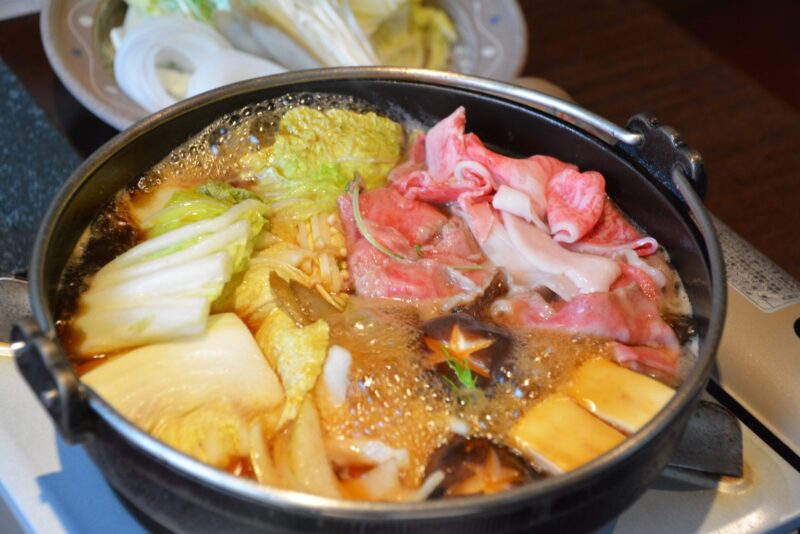
① Sukiyaki
Sukiyaki is one of Japan’s most iconic hot pot dishes. Thinly sliced beef is simmered in a sweet soy-based sauce and then dipped into beaten raw egg for a rich, silky bite.
Leek, shirataki noodles, grilled tofu, and chrysanthemum greens are commonly added, and the exact balance of flavors differs slightly by household and region.
In the Kanto area, the sauce (warishita) is added first, while in Kansai the beef is seared and seasoned in the pot before other ingredients are added.
- Recommended sake: Smooth junmai ginjo
- Place of origin: Kansai region
② Shabu-shabu
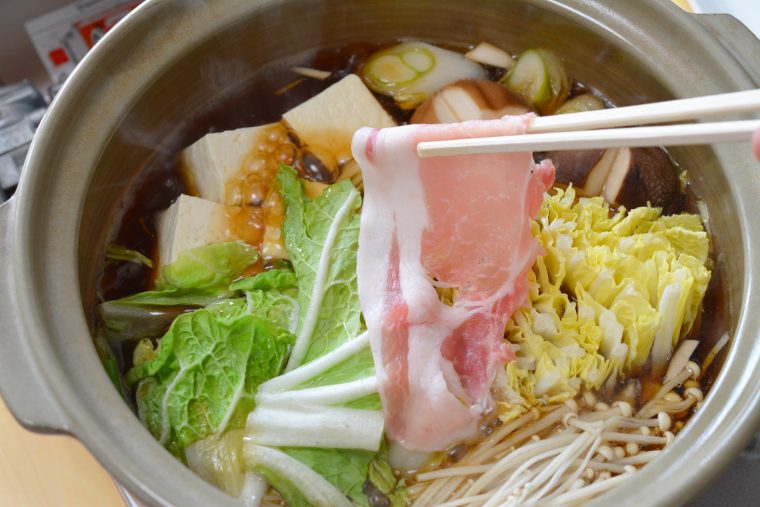
Shabu-shabu is a light and elegant hot pot where thin slices of meat are briefly swished in hot broth — just enough to cook through.
It’s typically enjoyed with ponzu (citrus soy sauce) or sesame dipping sauce, and served with plenty of vegetables and tofu, making it a relatively healthy choice.
As the meal goes on, the flavor of the meat enriches the broth, which is then used for noodles or rice porridge at the end of the meal.
- Recommended sake: Light honjōzō or chilled sake
- Place of origin: Osaka (around the 1950s)
③ Chanko Nabe
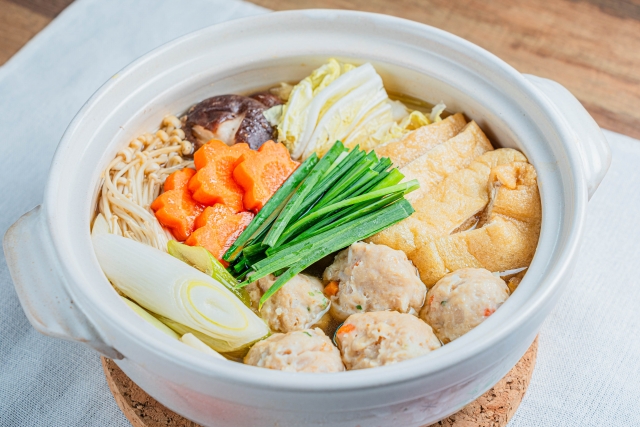
Chanko nabe is famous as the hearty hot pot eaten by sumo wrestlers.
It’s packed with chicken, seafood, and vegetables, and can be seasoned with miso, soy sauce, or salt depending on the style.
Sumo stables traditionally share one big pot to “unite the team,” and at home it has also become a popular dish for gathering friends and family around the table.
- Recommended sake: Full-bodied junmai sake
- Place of origin: Ryogoku, Tokyo
④ Yose Nabe
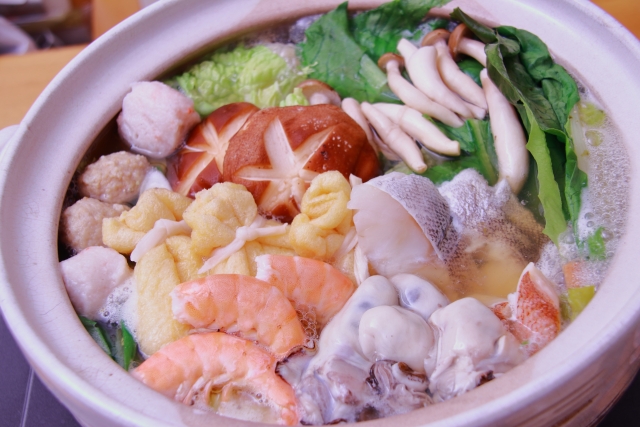
Yose nabe literally means “gathered hot pot,” and the name reflects its character: many different ingredients are gathered together in one pot.
Seafood, meat, tofu, and vegetables can all be combined freely depending on the broth and what’s in season.
On a cold winter night, the sight of family or friends gathered around a yose nabe, smiling and chatting, truly captures the warmth of Japanese winter life.
- Recommended sake: Slightly dry ginjo sake
- Place of origin: Various regions across Japan
⑤ Motsu Nabe
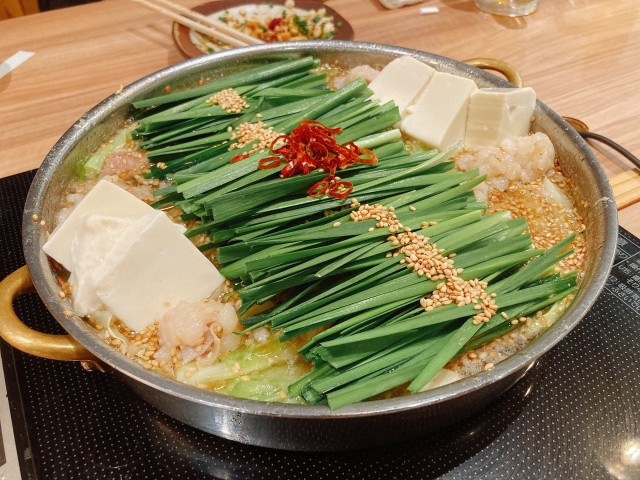
Motsu nabe is a beloved hot pot from Fukuoka, made with beef or pork offal simmered together with garlic chives, cabbage, and garlic.
The broth is usually soy sauce, miso, or salt based, offering a rich yet surprisingly clean finish.
Enjoyed with a good local sake on a cold night, motsu nabe warms you up from the inside out.
- Recommended sake: Robust, umami-rich local sake
- Place of origin: Fukuoka Prefecture
Summary
Hot pot is a warm, communal food culture that represents winter in Japan.
Sharing seasonal ingredients from a single pot, while chatting and laughing through the rising steam, is a joy in itself.
With a cup of sake in hand, why not experience the comfort of Japanese hot pot and let both your body and heart thaw in the cozy warmth?