



In Japan, people often say “Itadakimasu” before eating and “Gochisousama deshita” after finishing a meal.
These phrases are taught from childhood and are deeply rooted in everyday Japanese life.
To many foreigners, they may look like simple mealtime greetings, but they actually express gratitude, respect, and an awareness of life.
What Does “Itadakimasu” Mean?
“Itadakimasu” is often translated as “Let’s eat” or “I humbly receive,” but its meaning is deeper than a simple signal to start eating.
It expresses appreciation for everything involved in the meal.
- Gratitude for the plants and animals that became food
- Thanks to the person who prepared the meal
- Appreciation for the farmers, fishermen, transport workers, and sellers
- Gratitude for being able to eat in peace
The word “itadaku” is a humble Japanese expression used when receiving something with respect.
By saying “Itadakimasu,” Japanese people show that food is not taken for granted.
Why Do Japanese People Put Their Hands Together?
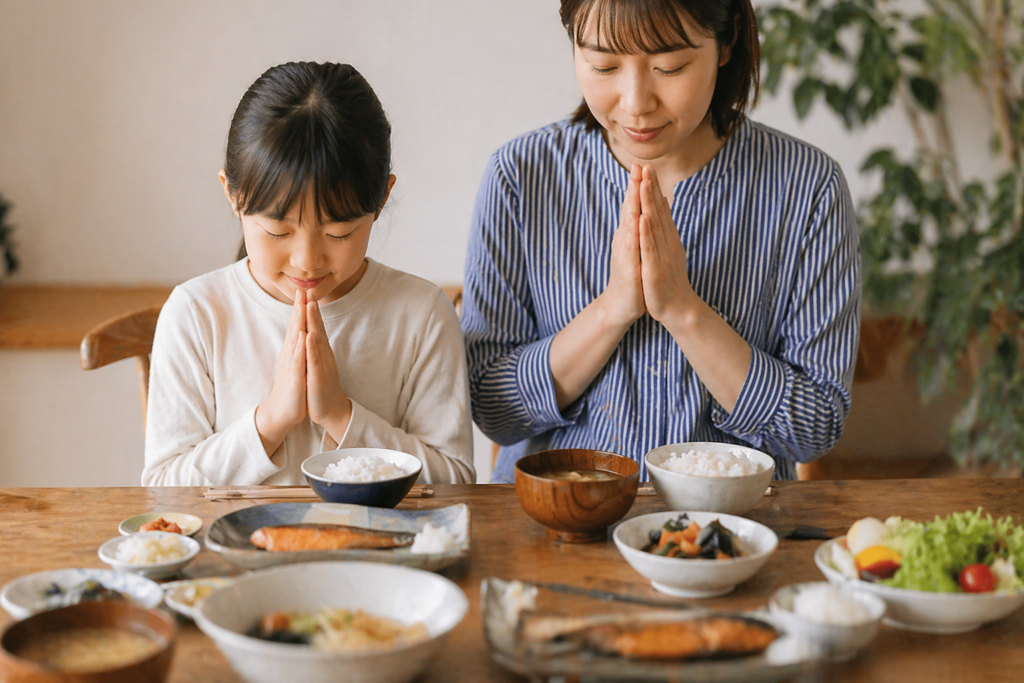
When saying “Itadakimasu,” many Japanese people put their hands together in front of the chest.
This gesture may look religious to some visitors, but in daily life it is usually more cultural than strictly religious.
It is a quiet way of showing respect before eating.
Some people say it out loud, while others say it softly or silently depending on the situation.
What Does “Gochisousama” Mean?
After finishing a meal, Japanese people say “Gochisousama deshita.”
This phrase means something close to “Thank you for the meal.”
The word “chisou” originally meant “running around.”
In the past, preparing a meal required effort: gathering ingredients, cooking, and serving food.
Over time, the phrase came to express gratitude for all the effort behind the meal.
“Gochisousama” is the shorter, more casual form, while “Gochisousama deshita” is more polite.
Cultural and Historical Background
These phrases are connected to Japanese ideas about life, nature, and gratitude.
In Buddhist thought, eating means receiving another life.
In Shinto traditions, nature, rice, harvests, and food have long been treated with respect.
Today, most Japanese people do not necessarily think of these phrases as religious expressions.
Rather, they are part of daily manners and family education.
Children are often taught to say them as a way of learning appreciation and respect.
When Are These Phrases Used Outside Meals?
“Itadakimasu” can also be used when receiving food or a gift.
In that case, it means “I gratefully accept this.”
“Gochisousama” is also used when someone treats you to a meal or gives you something delicious.
It is a way to say thank you for the food or hospitality.
How Foreigners May See This Custom
For people from other cultures, saying special words before and after every meal may feel unusual.
The gesture of putting hands together may also look like a prayer.
However, in Japan, this custom is not limited to one religion.
It is widely practiced as part of Japanese food culture and everyday manners.
Why These Words Matter
“Itadakimasu” and “Gochisousama” remind people that food does not appear by itself.
Behind every meal, there are lives, nature, work, time, and care.
These short phrases reflect a very Japanese way of thinking:
even ordinary daily actions can carry gratitude and respect.
Conclusion
“Itadakimasu” and “Gochisousama” are more than mealtime phrases.
They express gratitude for food, respect for life, and appreciation for the people who made the meal possible.
If you visit Japan or eat with Japanese people, try saying these words.
They are simple, but they can help you understand an important part of Japanese culture.