

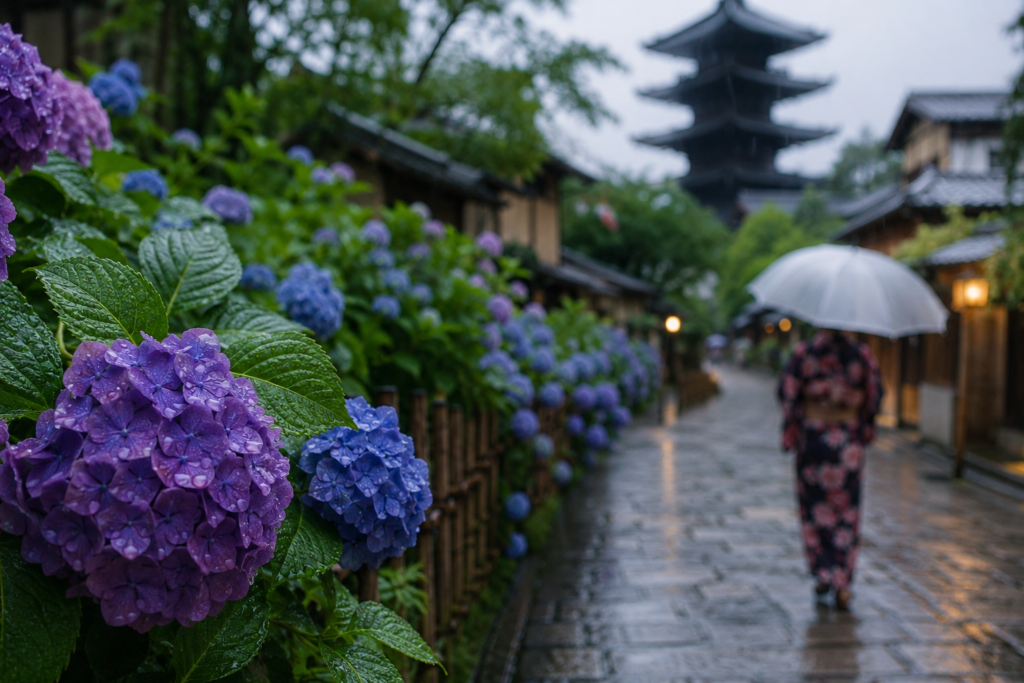
From late May to mid-July, much of Japan enters the rainy season known as “Tsuyu.”
During this period, many areas south of Hokkaido, excluding the Ogasawara Islands, experience frequent rain, cloudy skies, rising temperatures, and high humidity.
What Is Tsuyu?
Tsuyu is Japan’s rainy season, caused by a seasonal rain front formed when warm and cold air masses meet.
It brings long periods of rain and cloudy weather to many parts of Japan.
The word “Tsuyu” is associated with the time when Japanese plums ripen, which is why the kanji for plum is used in the word.
When and Where Does the Rainy Season Happen?
In most areas of Japan’s main islands, the rainy season usually lasts from late May to mid-July.
Hokkaido and the Ogasawara Islands are exceptions and do not experience the same clear rainy season as mainland Japan.
If you plan to travel in Japan during this period, it is important to check the weather forecast regularly.
High Humidity and Discomfort
Tsuyu is not only rainy; it is also very humid.
Even when the temperature is not extremely high, the high humidity can make the air feel heavy and uncomfortable.
Clothes may feel sticky, and you may sweat after only a short walk.
This is also the season when mold can easily grow in homes, hotels, and poorly ventilated places.
Heavy Rain and Travel Safety
In recent years, Japan has sometimes experienced extremely heavy rainfall during the rainy season.
These downpours can feel almost tropical and may cause flooded roads, train delays, or cancellations.
Travelers should pay attention to weather alerts, disaster information, and transportation updates, especially when visiting mountain areas or places near rivers.
How to Enjoy Japan During the Rainy Season
Although Tsuyu can be humid and inconvenient, it also has its own beauty.
Hydrangeas, rain-soaked temples, quiet shrines, lush gardens, and peaceful hot spring towns all have a special atmosphere during this season.
Hydrangeas are especially popular during the rainy season, and many places in Japan hold hydrangea festivals.
After Tsuyu Comes Summer
When the rainy season officially ends, Japan enters full summer.
Hot sunny days begin, along with fireworks festivals, summer holidays, Bon Odori dances, and many local summer events.
Conclusion
Japan’s rainy season can be humid and sometimes uncomfortable, but it is also a unique part of Japanese life and nature.
If you visit Japan during Tsuyu, check the weather forecast often and enjoy the seasonal beauty that only rainy Japan can offer.